

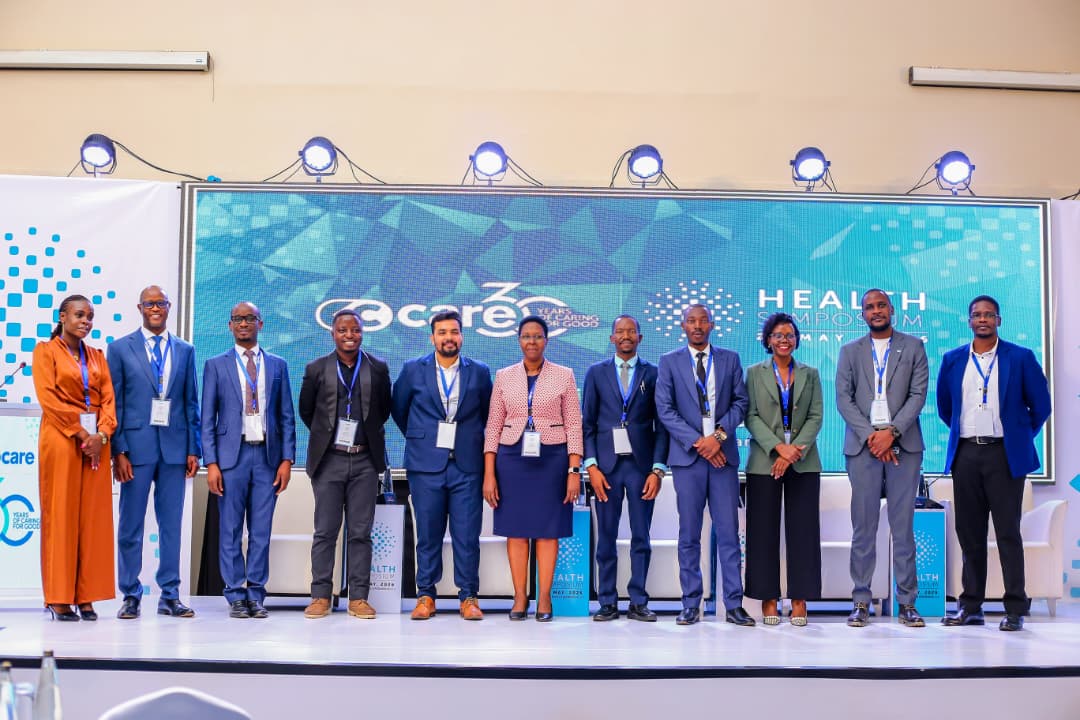
C-Care Uganda has convened its inaugural Health Symposium at Mestil Hotel in Kampala, bringing together medical professionals, researchers and policymakers to discuss the future of healthcare under the theme, “Evolution in Healthcare: From Innovation to Excellence.”
The symposium focused on emerging healthcare technologies, specialist training, medical research and the need for stronger collaboration between public and private healthcare institutions.
Speaking as Guest of Honour, Dr Rosemary Byanyima urged healthcare providers to embrace innovation as a pathway to improving clinical outcomes and achieving excellence in service delivery.
She commended C-Care Uganda for creating a platform that promotes knowledge sharing among health professionals, noting that Uganda’s healthcare sector has significant potential if institutions continue investing in research, technology and partnerships.
“The future of healthcare is exceptionally bright,” Dr Byanyima said.
She emphasized the importance of cooperation between public, private and private non-profit healthcare providers in advancing universal health coverage.
“If we are to achieve universal health coverage, the public and private sector must work together to bridge the existing healthcare gaps. We are not here to compete because we all have enough work,” she added.
Dr Byanyima also highlighted Uganda’s progress in maternal and child health, particularly in the prevention of mother-to-child transmission of HIV. She revealed that the country’s maternal mortality rate declined from 430 deaths per 100,000 live births in 2011 to 150 deaths per 100,000 by 2020.
The Mulago National Referral Hospital Executive Director further underscored the growing role of technology in healthcare delivery, citing artificial intelligence, telemedicine, tele-radiology, telepathology and electronic medical records as critical components of the future health system.
She disclosed that Mulago National Referral Hospital plans to digitize its operations within the next five years through a dedicated grant aimed at improving efficiency and patient care.
“We are venturing into artificial intelligence, telemedicine, and electronic medical records. But technology alone is not enough; we must empower healthcare workers to effectively use these innovations,” she said.
Dr Byanyima also raised concern over Uganda’s shortage of medical specialists, especially in rural districts, as well as the increasing migration of healthcare workers abroad.
“You cannot have one specialist available 24 hours every day throughout the year. We need to train and retain more specialists,” she noted.
During the symposium, medical experts presented research findings on critical health challenges facing Uganda and shared experiences in advancing specialized healthcare services.
Dr Juma Fauz Kavuma reflected on C-Care Uganda’s 30-year journey in specialized healthcare, highlighting milestones such as Uganda’s first open-heart surgery and first minimally invasive surgery.
He also noted that the hospital became the first healthcare facility in East Africa to receive accreditation from the Council for Health Service Accreditation of Southern Africa (COHSASA), maintaining the certification for more than a decade.
“We want to reduce the number of Ugandans flying abroad for treatment by providing specialized healthcare services here at home,” Dr Kavuma said.
He called for increased investment in emergency services, specialist training and advanced diagnostic equipment to strengthen healthcare delivery.
Meanwhile, Dr Peter Kavuma presented research on the use of advanced life support and resuscitation skills among healthcare workers.
He noted that internationally accredited emergency care training programmes are now available locally, reducing the need for clinicians to travel abroad for certification.
According to his findings, sudden cardiac arrest causes an estimated 3.7 million deaths globally each year, with low-resource countries recording higher mortality rates due to weak emergency response systems and limited use of advanced resuscitation techniques.
The symposium also heard from Dr Dan Oriba Langoya, who presented findings on acute kidney injury (AKI) in Uganda.
He said infections such as sepsis, malaria and tuberculosis remain leading causes of kidney injury, while snakebite-related complications are becoming increasingly common in northern Uganda.
“Nearly 95% of acute kidney injuries in Uganda are community-acquired, meaning healthcare workers must identify and intervene early before complications become severe,” he said.
Dr Langoya further raised concerns about the shortage of nephrologists and specialized kidney care personnel in the country.
On severe malaria complications, Dr Andrew Ddamulira presented findings on secondary hemophagocytic lymphohistiocytosis (HLH), a rare but life-threatening inflammatory condition linked to severe malaria.
He explained that malaria-induced cytokine storms can trigger excessive immune responses, potentially leading to severe inflammation and organ failure.
Dr Ddamulira warned that some unexplained deaths among malaria patients could be associated with undiagnosed HLH, calling for increased research and awareness of rare malaria-related complications.
